Deeper Dive into the Ink-on-Film Abstracts using Macro Photography
A Better Perspective.
With my ink-on-film abstracts, I’ve always felt it was a challenge for viewers to fully interpret the pieces as a whole. So I began photographing them with my smartphone, hoping to reveal new layers within the work. To my disappointment, digital zoom proved worse than even the heavy compression you see on platforms like Twitter and Facebook.
Determined, I pulled out my DSLR and a macro lens to explore the art more intimately. For a while, I was completely absorbed—capturing different perspectives of the same piece, sometimes spending an extra two to three hours per artwork, searching for small windows I might have missed. The feedback that followed felt like being back at art shows. Online friends, family and patrons and I would chat about a single piece for 30–45 minutes, playing an artful version of Where’s Waldo or I Spy. Those interactions confirmed that shifting toward macro photography to magnify the pieces was the right move.
But something was still missing. The images were accurate, the details sharp, yet I wasn’t achieving the depth of field that originally made me fall in love with photography almost 20 years ago. After weeks of wrestling with the idea, I reached a conclusion I had avoided from the very first autofocus beep: depth of field relies on foregrounds and backgrounds—something flat, 2D paintings simply don’t have.
So I took a deep breath and destroyed the work so another could be born.
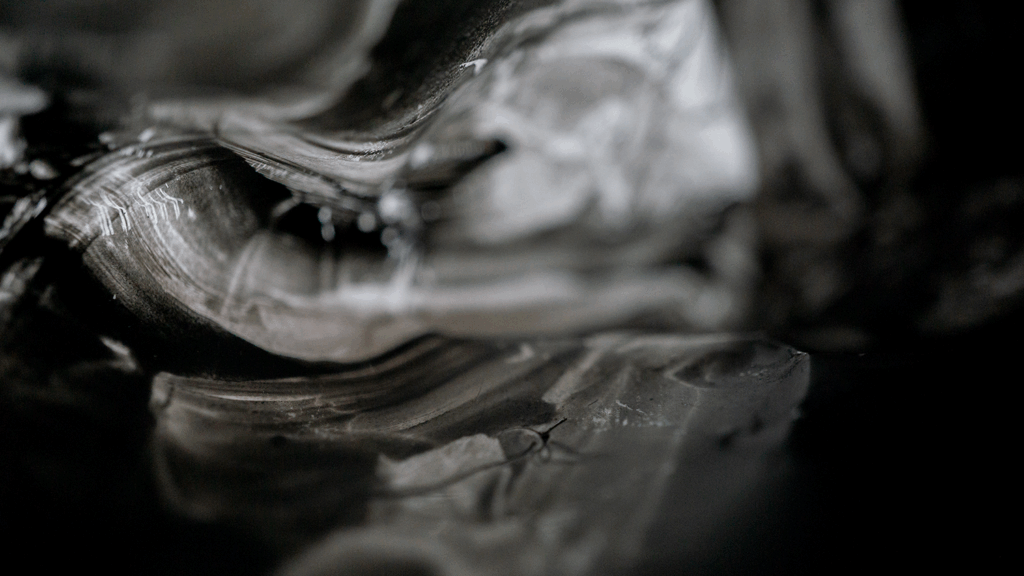
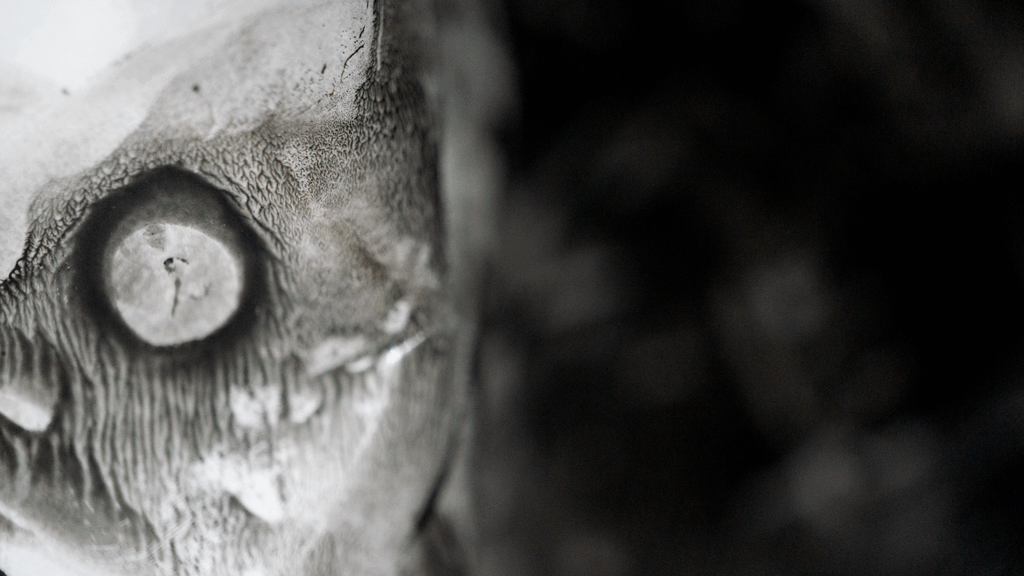
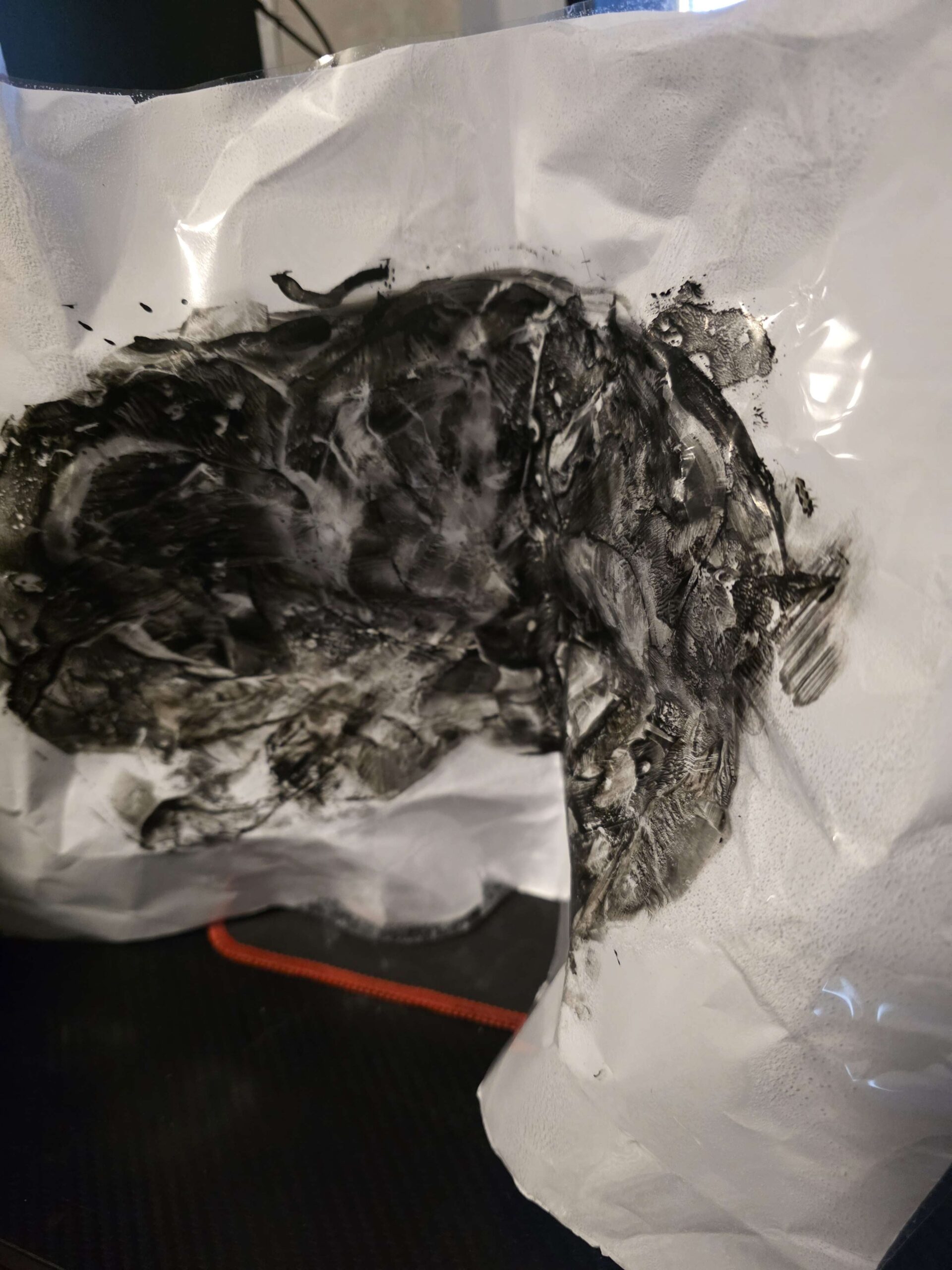
So I took a deep breath and made a painful decision. Even though each piece takes 60–90 hours to create, I crumpled one of the paintings into a tight ball, then twisted and contorted it to produce new edges and planes. It hurt to do, and during those violent motions, I questioned whether I was ruining something irreplaceable. But when I set up my space and took the first photograph, I was stunned.
Just like how I accidentally stumbled into ink-on-film years ago, this too became a happy accident. The destroyed surfaces formed new clashes of contrast, unexpected shadows, and vivid pathways for the lens to follow. I spent hours exploring these “ruined” works, discovering abstract worlds hidden within their folds.
I believe this altered medium deserves the same respect I’ve given my ink-on-film process for the past six years. And while it’s still the beginning of a new direction, it continues to spark conversations about perspective, transformation, and the many ways a single subject can be seen.
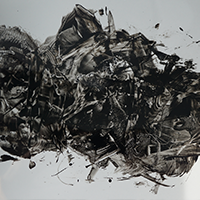
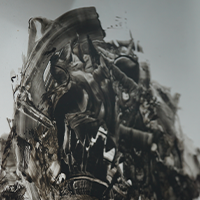
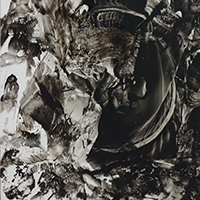
I’ve included a few shots from my early experiments with the destroyed pieces below. More can be viewed on my Patreon, and I’ve submitted several to Decagon Gallery’s Black and White Photography Contest.