

Ink on Film: The Rising Edge of Abstract Art and the Return of High Art
In the evolving world of contemporary creativity, few mediums challenge perception and reinterpret tradition the way ink on film does. As artists continually push beyond boundaries, exploring new ways to express identity, motion, and emotion, the conversation around materials becomes inseparable from the conversation around meaning. Abstract art has always thrived on this tension—between what is seen and what is felt, between the literal and the imagined. And today, a powerful resurgence is occurring as artists revisit the intentionality, craftsmanship, and innovation often associated with high art, but through modern, unconventional mediums.
Among these mediums, ink on film stands out as one of the most compelling.
Once used primarily in animation, photography, and technical industries, film has become an unexpected canvas for contemporary abstract artists. When paired with ink—one of humanity’s oldest artistic tools—it forms a striking hybrid of tradition and experimentation. The result is a medium that invites unpredictability, rewards patience, and offers limitless visual possibilities.
This blog post explores why ink on film is rapidly becoming a new frontier in abstract art, how artists use it to craft pieces that embody the sophistication of high art, and why this medium resonates with the modern viewer.
The Unpredictable Magic of Ink on Film
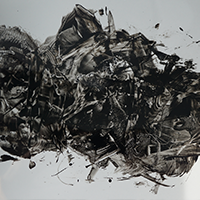
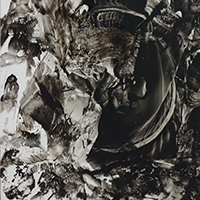
Unlike traditional paper or canvas, film is a living surface. It resists, accepts, absorbs, and repels ink in ways that make no two marks alike. When ink meets film, it behaves with a mind of its own—branching into organic shapes, collapsing into gradients, or fracturing into crystal-like structures depending on temperature, pressure, timing, and even humidity.
This interaction between medium and material is at the heart of what makes abstract art so powerful. It asks both artist and viewer to accept uncertainty and see meaning in spontaneous forms.
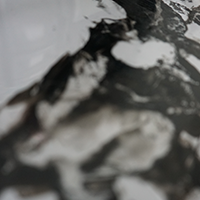
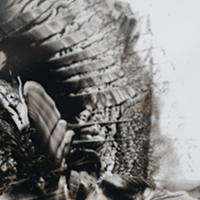
For the artist, ink on film becomes a conversation. You can plan your movements, but you cannot fully control the outcome. Each stroke or drip produces a new dialogue. The film warps or holds tension and the ink settles into unexpected textures. The result is a piece that feels alive—shifting subtly depending on how it’s rotated, how it’s lit, or how closely it’s inspected.
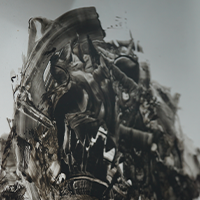
For viewers, these works invite prolonged engagement. You’re encouraged to look deeper, rotate the piece, and find new shapes: faces, landscapes, silhouettes, or entirely abstract impressions. This level of interaction elevates the experience into something far beyond passive observation.
It reaffirms a crucial truth: abstract art is not about what you see, but how you see.
Why Ink on Film Fits Within the Tradition of High Art
In recent years, the definition of high art has expanded. It’s no longer limited to oil on canvas or bronze sculpture. Instead, high art now represents depth, innovation, craftsmanship, and the ability to provoke thought. Under that lens, ink on film belongs squarely within this category.
1. The Medium Requires Skill and Intentionality
Ink on film punishes hesitation and reveals impulsiveness. Every movement must be measured and purposeful, yet open to the medium’s natural unpredictability. There is no “undo” button—only refinement. This balance between control and surrender echoes the discipline seen in master-level calligraphy, traditional ink painting, and large-scale abstract expressionism.
2. The Process is Labor-Intensive
True ink-on-film artists often spend weeks on a single piece. They craft custom tools, mix specialized inks, test swatches, and adjust their technique depending on the film’s responsiveness. The patience required elevates this medium into the realm of high-art craftsmanship, where each detail is intentional.
3. The Final Result Holds Depth and Longevity
The complexity of ink settling into film creates rich textures and layered dimensions. These pieces often look different depending on lighting and angle—offering a dynamic, gallery-quality visual impact. This makes the work highly collectible, visually striking, and capable of commanding attention in both contemporary art spaces and fine-art collections.
4. The Viewer Becomes Part of the Experience
High art invites participation—not through interaction, but through interpretation. Ink on film excels at this. The shapes and shadows born from the ink’s natural movement feel both random and deliberate. Viewers project their own imagination onto the piece, creating a personal connection that strengthens the art’s emotional resonance.
Ink on Film as a New Frontier in Abstract Art
For decades, abstract art has been a language—one built on emotion, movement, color, and gesture. Ink on film brings a new dialect to that language.
Unpredictability as a Core Element
In painting, unpredictability is usually controlled. Brushes create consistent strokes; paint blends in predictable ways. Ink on film defies this. You can drop ink onto the film at the exact same angle twice, and it will still form entirely different patterns each time.
This unpredictability challenges traditional expectations of abstract art, pushing the medium further into organic territory—closer to geology, biology, or cosmic imagery than to traditional painting.
A Bridge Between Analog and Digital Eras
The use of film—a material historically associated with analog photography and animation—creates a unique tension in the digital age. Ink on film becomes a bridge between past and present. It embraces the handcrafted nature of analog mediums while producing results that feel futuristic and almost digital in pattern.
- A Fresh Space for Innovation
- Artists are experimenting with:
- heat manipulation
- layered ink pours
- custom-blended pigments
- scraping and pressure techniques
- rotational perspectives
- multi-panel film installations
Each technique opens new territory, making ink on film one of the fastest-growing alternative mediums in modern abstract art.
Why Collectors Are Paying Attention
In the art market, innovation and authenticity drive value. Ink on film offers both.
Collectors appreciate:
- the uniqueness of each piece
- the inability to replicate patterns
- the fresh aesthetic
- the balance between chaos and control
- the emotional storytelling within the textures
Additionally, because these works often feel simultaneously modern and timeless, they complement a wide range of interiors—from minimalist galleries to contemporary homes. The medium stands out without overwhelming other pieces, making it ideal for curated collections.
As more artists adopt this medium, galleries are beginning to recognize ink on film as a legitimate and impactful addition to the spectrum of high art.
Conclusion: Ink on Film Is More Than a Medium—It’s Movement
In a world oversaturated with digital perfection, ink on film brings something beautifully imperfect. It reminds us of what abstract art has always championed: emotion, spontaneity, perspective, and the freedom to interpret.
It is high art not because of prestige, but because of intention—because of the time invested, the skill required, and the transformative experience it offers both the creator and the viewer.
Ink on film is not merely a technique.
It is a dialogue between material and imagination.
A reminder that art is alive.
A space where the unexpected becomes the unforgettable.




Comments (2)
Denis Pittman
Lorem ipsum dolor sit amet consectetur adipiscing elit lacinia integer, torquent accumsan ultricies.
Jona Picker
Lorem ipsum dolor sit amet consectetur adipiscing elit lacinia integer, torquent accumsan ultricies.
Comments are closed.