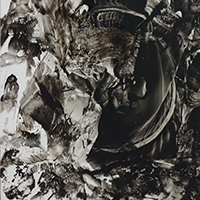
My top 4 Artist who have inspired me along the way.
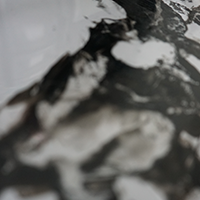
Gustave Doré
Gustave Doré resonates with me because of his ability to merge technical mastery with emotional gravity. His work isn’t just illustrative—it’s immersive. Doré understood how light, shadow, and scale could be used to evoke awe, dread, wonder, and reverence all at once. His compositions feel vast and atmospheric, often placing the viewer inside a moment rather than simply showing it to them. There’s a sense that something monumental is unfolding, even in stillness.
What inspires me most is Doré’s command of contrast and negative space. He allowed darkness to speak just as loudly as form, using restraint to amplify emotion. That philosophy directly influences my abstract work. In my Ink on Film pieces, I’m similarly interested in how absence, fracture, and quiet space can hold meaning alongside gesture and movement.
Doré also embraced ambiguity. While his works are representational, they leave room for interpretation, emotion, and personal reflection. I approach abstraction with the same intent—creating visual environments that don’t dictate meaning but invite the viewer to step in, linger, and discover their own narrative.
Ultimately, Doré reminds me that art can be both disciplined and poetic, controlled yet deeply expressive. That balance—between structure and surrender—is at the core of my practice.
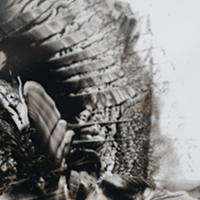
Adolf Hirémy-Hirschl
Adolf Hirémy-Hirschl inspires me for many of the same reasons as Gustave Doré, but in a quieter, more psychological way. His work carries a heavy emotional atmosphere—one that lingers rather than declares itself. Hirémy-Hirschl had a rare ability to use composition, symbolism, and restraint to communicate inner states: isolation, reflection, transcendence, and existential weight. His figures often feel suspended in time, caught between thought and action, which gives the work a haunting stillness.
What draws me most to his paintings is the way space functions emotionally. Large, open fields of darkness or muted color aren’t empty—they’re charged. They hold tension, memory, and silence. That sensibility directly informs my abstract practice. In my Ink on Film work, I think about space not as background, but as an active presence. Areas where ink pulls away or fractures, feel just as important as the marks themselves.
Hirémy-Hirschl also balanced precision with mood. His control never stripped the work of mystery. That balance reinforces my belief that art doesn’t need to explain itself to be powerful. Like his paintings, my abstractions aim to create emotional environments rather than fixed narratives—places where viewers can project their own thoughts, memories, and questions.
His work affirms for me that art can be contemplative, restrained, and deeply human without being literal. That pursuit of emotional depth through subtlety continues to shape how I approach abstraction.
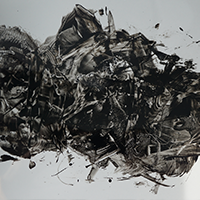
Hieronymus Bosch
Hieronymus Bosch inspires me because of his fearless imagination and his ability to give form to the unseen. His work operates beyond logic, moving instead through instinct, symbolism, and psychological space. Bosch didn’t paint reality as it appears—he painted reality as it feels, filling his compositions with tension, chaos, wonder, and unease. There’s a raw honesty in that approach that continues to resonate with me.
What I find most compelling is his acceptance of complexity and contradiction. Beauty and discomfort exist side by side, often within the same image. That sensibility influences how I approach abstraction. In my Ink on Film work, I allow unpredictable reactions, fractures, and collisions to coexist rather than resolve into something tidy. The goal isn’t harmony—it’s truth.
Bosch also embraced density and discovery. His paintings reward prolonged viewing, revealing new forms and narratives over time. I aim for a similar experience in my abstract work, where the eye can wander, uncover hidden relationships, and build personal meaning. Like Bosch, I’m drawn to art that invites exploration, challenges certainty, and acknowledges the strange, layered nature of human experience.
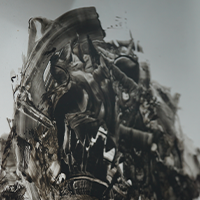
Zdzisław Beksiński
Zdzisław Beksiński inspires me because of his uncompromising commitment to atmosphere over explanation. His work feels less like imagery and more like a psychological environment—dense, decayed, and emotionally charged. Beksiński created worlds that are haunting without being illustrative, allowing mood, texture, and form to carry the weight of meaning rather than narrative clarity.
What resonates most with me is his use of erosion, fracture, and transformation. Surfaces in his work feel weathered, unstable, and alive, as if they are in the process of becoming or collapsing. That sensibility strongly influences my abstract practice. In my Ink on Film work, I’m drawn to similar moments where materials break down, pull apart, or form unexpected structures through chemical reaction.
Beksiński also refused interpretation, believing the work should exist without explanation. That philosophy aligns deeply with how I approach abstraction. I aim to create spaces that evoke emotion without prescribing it—where viewers can confront discomfort, stillness, or curiosity on their own terms. His work reinforces my belief that abstraction can be dark, contemplative, and deeply human without needing to explain itself.